Preparing Students for Real-World Behavioral Health Careers
Behavioral health and substance use disorder treatment programs increasingly rely on Electronic Health Records (EHRs) to manage clinical documentation, treatment planning, billing, reporting, and patient outcomes. As a result, employers are looking for graduates who understand not only addiction counseling principles but also how to document care within modern healthcare technology systems.
For colleges, universities, and training programs that offer Addiction Studies, Substance Abuse Counseling, Human Services, or Behavioral Health degrees, providing students with hands-on EHR experience can help bridge the gap between classroom learning and professional practice. Educational institutions that incorporate an EHR training platform into their curriculum give students an opportunity to develop practical documentation skills before entering internships or the workforce. Research and workforce training programs increasingly recognize the importance of EHR competency as part of preparing future substance use disorder professionals.
Why EHR Experience Matters in Addiction Studies Education
Many graduates enter treatment facilities with strong theoretical knowledge but limited exposure to real-world documentation workflows. Once employed, they are expected to document assessments, treatment plans, progress notes, discharge summaries, and patient interactions within an electronic system.
Today’s addiction treatment professionals routinely work with:
- Intake and admission documentation
- Biopsychosocial assessments
- Treatment planning
- Progress notes
- Group therapy documentation
- Case management records
- Medication-assisted treatment (MAT) documentation
- Outcome tracking and reporting
- Compliance-related documentation
Learning these processes in a classroom environment helps students become more confident and workforce-ready before their first day on the job. Educational programs focused on addiction studies increasingly emphasize practical experience and preparation for multidisciplinary treatment environments.
What Is an EHR Training Platform for Addiction Studies?
An EHR training platform for addiction studies is a secure educational environment that allows students to practice documentation using realistic behavioral health and substance use disorder workflows.
Unlike a live healthcare system, training platforms use simulated patient records and educational scenarios, allowing students to learn without exposure to protected health information.
Students can gain experience with:
- Clinical documentation workflows
- Treatment planning processes
- Progress note creation
- Behavioral health assessments
- Case management documentation
- Care coordination activities
- Documentation compliance standards
- Reporting and data management
The goal is to help students understand how clinical information is organized, documented, and communicated throughout the continuum of care.
Key Features Schools Should Look For
1. Simulated Patient Records
Students learn best when working with realistic scenarios. A quality EHR simulation platform should provide opportunities to document patient encounters using mock client records that mirror real-world behavioral health treatment settings.
This allows students to:
- Practice assessment documentation
- Build treatment plans
- Record progress notes
- Document discharge planning
- Track patient progress over time
Simulation-based learning helps reinforce classroom concepts while developing documentation confidence.
2. Behavioral Health-Specific Workflows
Generic healthcare EHR systems often fail to reflect the unique needs of addiction treatment programs.
Educational institutions should seek platforms that support:
- Substance use disorder assessments
- Behavioral health treatment planning
- Group counseling documentation
- Individual therapy notes
- Recovery support services
- Continuing care planning
- MAT documentation workflows
Students gain greater value when training mirrors the environments they are likely to encounter after graduation.
3. Instructor Oversight and Evaluation
Faculty members should be able to monitor student progress and evaluate documentation quality.
Useful educational capabilities include:
- Assignment management
- Documentation review
- Student activity tracking
- Skills assessment
- Performance feedback
- Workflow completion monitoring
These tools help instructors measure competency while providing meaningful feedback.
4. Documentation Standards Training
One of the most important skills students develop is learning how to document services clearly, accurately, and professionally.
Training should reinforce:
- Clinical writing standards
- Documentation completeness
- Treatment plan development
- Objective progress note writing
- Professional communication practices
- Record organization and consistency
Strong documentation habits developed during training often carry forward into professional practice.
5. Privacy and Compliance Education
Behavioral health professionals work with highly sensitive information.
An effective EHR training platform should help students understand:
- HIPAA requirements
- Confidentiality best practices
- Security awareness
- Appropriate information access
- Documentation accountability
- Ethical record management
These concepts are essential regardless of the setting in which graduates ultimately work.
6. Reporting and Outcomes Tracking
Behavioral healthcare organizations increasingly use data to evaluate treatment effectiveness and support quality improvement initiatives.
Students should become familiar with:
- Clinical reporting tools
- Outcome measurement concepts
- Patient progress tracking
- Population health reporting
- Performance metrics
- Data-driven decision making
Exposure to reporting concepts prepares graduates for modern healthcare environments where measurable outcomes play a growing role in service delivery.
Benefits for Addiction Studies Programs
Better Workforce Readiness
Students graduate with practical experience using healthcare technology commonly found in behavioral health and addiction treatment organizations.
Enhanced Internship Preparation
Students enter field placements with a stronger understanding of documentation expectations and workflow processes.
Increased Student Confidence
Hands-on practice reduces uncertainty when students transition from academic learning to clinical environments.
Stronger Employer Appeal
Graduates who already understand EHR documentation often require less onboarding and training after hire.
Improved Learning Outcomes
Students can connect classroom concepts directly to real-world clinical workflows, improving knowledge retention and practical application.
How MedEZ® Supports Addiction Studies Education
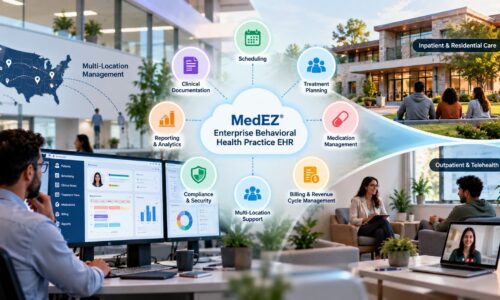
MedEZ® provides a specialized behavioral health EHR platform designed specifically for mental health and substance use disorder organizations. The platform supports the same types of workflows used throughout addiction treatment settings, including assessments, treatment planning, clinical documentation, outcomes tracking, and integrated billing processes.
Through the MedEZ® Education Program, colleges, universities, nonprofit organizations, and workforce development programs can provide students with practical exposure to behavioral healthcare technology in a structured learning environment. The platform includes behavioral health-focused documentation tools, treatment planning capabilities, configurable forms, and workflows designed specifically for substance use disorder treatment settings.
Educational institutions can leverage MedEZ® to help students:
- Practice clinical documentation
- Learn treatment planning processes
- Understand behavioral health workflows
- Experience electronic chart management
- Build workforce-ready technology skills
- Connect classroom learning with professional practice
For programs preparing future addiction counselors, behavioral health professionals, peer recovery specialists, and human services practitioners, hands-on EHR training can become a valuable component of career readiness.
Frequently Asked Questions
What is an EHR training platform for addiction studies?
An EHR training platform for addiction studies is an educational system that allows students to practice behavioral health and substance use disorder documentation using simulated patient records and real-world clinical workflows.
Why should addiction studies students learn EHR documentation?
Most behavioral health and addiction treatment organizations use EHR systems for clinical documentation, treatment planning, reporting, and compliance. Early exposure helps students become workforce-ready.
What skills can students learn using an EHR training platform?
Students can learn assessment documentation, treatment planning, progress note writing, case management documentation, privacy requirements, and behavioral health workflow processes.
Can EHR training improve internship readiness?
Yes. Students who understand documentation workflows and EHR navigation often transition more smoothly into internships and practicum placements.
How does MedEZ® support educational institutions?
MedEZ offers a behavioral health-focused platform that can be used by colleges, universities, and nonprofit training organizations to provide students with practical experience using technology designed for mental health and substance use disorder treatment settings.
Final Thoughts
The behavioral healthcare workforce increasingly depends on technology-driven documentation, reporting, and care coordination. Educational programs that incorporate an EHR training platform for addiction studies help students gain practical experience before entering the workforce.
By combining classroom instruction with hands-on EHR training, colleges and universities can better prepare future addiction counselors and behavioral health professionals for the realities of modern clinical practice. Programs that invest in experiential learning opportunities not only improve student confidence but also help graduates transition more successfully into careers serving individuals affected by substance use disorders.
For institutions looking to strengthen workforce readiness and enhance addiction studies education, explore the MedEZ® Education Program: MedEZ Education Page.