Behavioral health providers working with Indiana Department of Child Services (DCS) programs face unique documentation and reporting requirements. Between clinical documentation, compliance expectations, family involvement, and state reporting obligations, organizations need workflows that are structured specifically for child and adolescent behavioral health services.
That is why many providers look for behavioral health EHR platforms that can support KidTrak reporting software behavioral health workflows.
While KidTrak is used for Indiana DCS reporting, providers often rely on their behavioral health EHR system to create, organize, and generate the documentation and reports required for submission. Without the right tools in place, reporting can quickly become time-consuming, fragmented, and difficult to manage.
Here are seven features behavioral health organizations should look for when selecting software to support Indiana DCS KidTrak reporting workflows.
What Is KidTrak Reporting in Behavioral Health?
KidTrak reporting refers to the reporting and documentation processes required for certain Indiana DCS behavioral health programs involving children and adolescents.
Behavioral health providers typically use their EHR platform to:
- Document clinical services
- Track treatment progress
- Maintain compliance records
- Coordinate care activities
- Generate reports required for Indiana DCS submission workflows
An effective behavioral health EHR helps organizations streamline the preparation and management of KidTrak-related reporting requirements while reducing manual administrative work.
7 Features Behavioral Health Providers Should Look for
1. Structured Documentation for Indiana DCS Workflows
Indiana DCS reporting requires organized and consistent documentation.
Behavioral health EHR software should support:
- Service documentation workflows
- Treatment planning
- Progress note management
- Authorization tracking
- Required reporting fields
- Audit-ready recordkeeping
Structured workflows help reduce incomplete documentation and make it easier to prepare reports required for KidTrak submission.
2. Age-Appropriate Outcome Tracking
Children and adolescents require different clinical outcome measures than adults.
Behavioral health software supporting Indiana DCS programs should allow providers to track:
- Emotional and behavioral functioning
- Symptom severity
- Treatment progress
- School and family-related concerns
- Risk indicators and safety concerns
This helps organizations demonstrate measurable treatment outcomes while supporting quality care initiatives.
3. Customizable Reporting Templates
Behavioral health organizations rarely operate under identical workflows.
Residential treatment centers, outpatient behavioral health programs, community mental health organizations, and substance abuse treatment providers often require different documentation formats.
Software supporting KidTrak reporting workflows should allow organizations to customize:
- Clinical note templates
- Reporting formats
- Program-specific workflows
- Indiana DCS documentation requirements
- Internal operational reports
Customizable workflows reduce duplicate data entry and improve staff efficiency.
4. Family and Guardian Communication Tracking
Child and adolescent behavioral healthcare frequently involves parents, guardians, caregivers, schools, and support agencies.
Behavioral health EHR systems should support documentation for:
- Guardian consent
- Family participation
- Care coordination activities
- Treatment plan reviews
- Communication history
- Multi-family involvement when applicable
Maintaining organized communication records is critical for both continuity of care and compliance readiness.
5. Real-Time Visibility into Patient Progress
Behavioral health conditions in children and adolescents can change rapidly.
Organizations need immediate access to current patient information instead of relying solely on periodic reporting cycles.
An effective behavioral health EHR should provide visibility into:
- Treatment progress
- Behavioral escalations
- Missed appointments
- Medication updates
- Risk indicators
- Care plan changes
Real-time access allows providers to respond quickly while improving coordination across care teams.
6. Multi-Provider Care Coordination
Indiana DCS behavioral health cases often involve multiple participants across the continuum of care.
This may include:
- Therapists
- Psychiatrists
- Case managers
- Residential staff
- School liaisons
- Family support teams
- Community providers
When documentation is spread across disconnected systems, communication gaps can occur.
A centralized behavioral health EHR platform helps providers maintain consistent documentation and improve collaboration across the entire care team.
7. Program-Level Analytics and Reporting
Behavioral health organizations need more than patient-level documentation.
Leadership teams also need access to operational and clinical reporting that helps evaluate:
- Program effectiveness
- Patient engagement trends
- Compliance performance
- Staff productivity
- Population health patterns
- Treatment outcomes
These insights help organizations improve services while supporting long-term operational planning.
How MedEZ® Supports Indiana DCS KidTrak Reporting Workflows
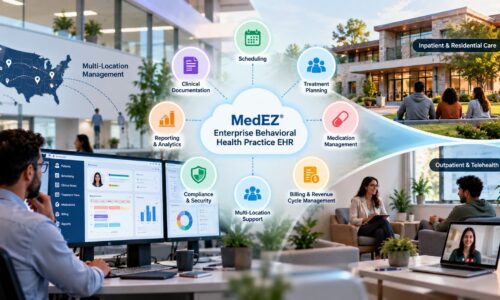
MedEZ® Behavioral Health EHR Software helps behavioral health and substance abuse providers streamline clinical documentation, operational workflows, billing, and compliance reporting.
For organizations supporting Indiana DCS programs, MedEZ® helps providers:
- Generate documentation required for KidTrak reporting workflows
- Centralize behavioral health documentation
- Track treatment progress and outcomes
- Support multi-provider coordination
- Configure program-specific documentation templates
- Improve compliance readiness
- Reduce administrative reporting burden
Because reporting, documentation, and operational workflows exist within one integrated platform, providers can improve efficiency while maintaining organized, audit-ready records.
You can also review this related MedEZ® case study:
Achieving Compliance and Efficiency in Indiana DCS Billing Case Study
Frequently Asked Questions
What is KidTrak reporting for behavioral health providers?
KidTrak reporting refers to reporting workflows associated with Indiana DCS behavioral health programs involving children and adolescents. Providers often use behavioral health EHR software to prepare and manage the documentation required for reporting submission.
Does MedEZ® replace KidTrak?
No. MedEZ® helps behavioral health providers manage clinical documentation and generate the reports and data needed to support KidTrak reporting workflows and Indiana DCS compliance processes.
Why is specialized behavioral health software important for Indiana DCS programs?
Indiana DCS behavioral health providers often have complex reporting, compliance, and care coordination requirements involving children, adolescents, and families. Specialized behavioral health EHR software helps organizations manage these workflows more efficiently and accurately.
Final Thoughts
Indiana DCS behavioral health reporting requirements can create significant administrative complexity when organizations rely on disconnected systems or manual workflows.
The right behavioral health EHR platform can help providers streamline documentation, improve care coordination, and better support the reporting processes associated with Indiana DCS and KidTrak workflows.
For organizations looking to improve operational efficiency and compliance readiness, MedEZ® provides behavioral health-focused tools designed to support complex child and adolescent behavioral health programs.